
Allergy: Causes, Types, Symptoms and Treatment
Have you ever noticed that as soon as you step into open air you start sneezing again and again, or when you come in contact with dust your eyes become red and watery? Some people feel itching on their skin after touching animals, while others get rashes or itching after eating certain foods. If any of this sounds familiar, then it is most likely an allergy. Allergy is a very common health problem today, and many people around the world suffer from different types of allergies.
Allergies can affect people at any age and of any gender. Some allergies last for a long time, while others are temporary and go away on their own. Even though the word “allergy” is very common and most people have heard it many times, many still do not fully understand what an allergy really is. Why do some people get allergies while others do not? How does the immune system react during an allergy? What are the common and rare types of allergies, their symptoms, tests, and treatments? In this article, we explain all these points in simple English.
What Is an Allergy and How Does It Happen?
Our immune system is responsible for keeping us healthy. It works like a guard for our body. It protects us from harmful microorganisms such as bacteria, viruses, and fungi. If these harmful organisms enter our body, the immune system fights them and destroys them so that we do not fall sick.
However, sometimes the immune system gets confused. It starts treating harmless substances as dangerous. When this happens, the immune system reacts strongly to things that are actually not harmful. This overreaction of the immune system is called an allergy.
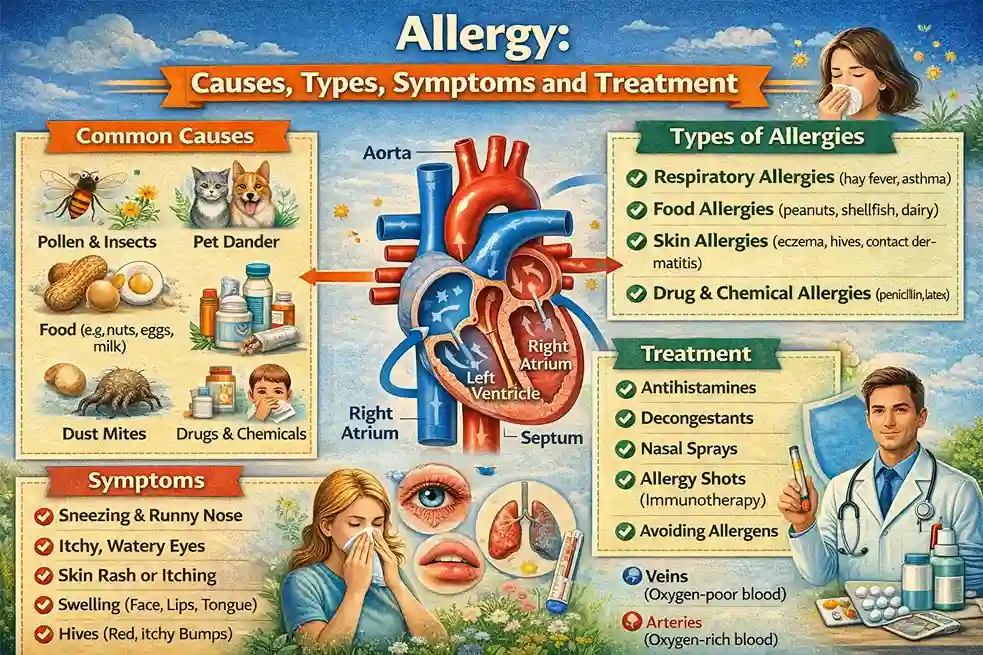
Substances that cause allergic reactions are known as allergens. Common allergens include pollen, dust, animal hair or skin cells, certain foods, medicines, and insect stings. When a sensitive person comes in contact with an allergen for the first time, the immune system produces a special antibody called Immunoglobulin E, or IgE. When the same allergen enters the body again, this IgE triggers the release of chemicals that cause allergy symptoms.
Who Is More Likely to Get Allergies?
Some people have a higher risk of developing allergies than others. Allergy can be hereditary, which means it can run in families. If one or both parents have allergies, their children are more likely to develop allergies too.
Children are generally more affected by allergies than adults. People who suffer from asthma also have a higher risk of allergic reactions. Smoking can increase sensitivity to allergens, making allergies worse. Some medicines can also cause allergic reactions in certain people. Pollution is another major reason why allergies are becoming more common today.
Common Symptoms of Allergy
The symptoms of allergy can be different for different people and depend on the type of allergen. However, some common allergy symptoms include watery or itchy eyes, redness or swelling of the eyes, continuous sneezing, runny or blocked nose, skin rashes, itching, vomiting, diarrhea, cough, swelling of the lips or tongue, difficulty in breathing, and sore throat.
Allergens can enter the body in many ways. They can be inhaled while breathing, eaten with food, injected through medicines or insect stings, or come in contact with the skin or eyes. The seriousness of an allergy can vary from person to person and also depends on the type of allergy.
Common Types of Allergies
Pollen allergy is one of the most common allergies. It is usually seasonal and occurs when pollen from flowers, trees, or grasses is present in the air. Pollen is a yellow powder that helps plants reproduce, but for people with pollen allergy, it causes symptoms like sneezing, runny nose, itchy eyes, sore throat, and sometimes asthma symptoms.
Another common airborne allergy is animal dander. Dander is made up of tiny skin cells shed by animals like cats and dogs. Dust mites and mold are also common airborne allergens that can cause allergic reactions.
Food allergies are also very common. Some of the most common food allergens include peanuts, nuts, soy, fish, shellfish, eggs, and milk. Different people can be allergic to different foods. Even a small amount of the allergenic food can cause symptoms in sensitive individuals.
Insect stings from bees, wasps, or ants can cause allergic reactions in some people. Certain medicines, especially penicillin and penicillin-based antibiotics, can also cause allergies. Latex, which is found in gloves and some medical products, can cause skin allergies in some people.
Rare Types of Allergies
Apart from common allergies, there are some rare allergies that may sound surprising. Some people are allergic to water. This condition is called aquagenic urticaria. In this allergy, skin rashes appear after contact with water in any form, such as rainwater, sweat, or tap water. Family history is considered a major reason for this type of allergy.
There is also a rare allergy to sunlight, known as solar urticaria. In this condition, skin rashes appear after spending just a few minutes in sunlight. Cold urticaria is another rare allergy in which people cannot tolerate cold temperatures and develop allergic reactions when exposed to cold.
Some people are allergic to coffee beans, wine, or beer. These allergies are uncommon but possible.
Anaphylaxis: A Life-Threatening Allergy
Anaphylaxis is the most serious and life-threatening type of allergic reaction. It can be triggered by foods, medicines, or insect stings. In anaphylaxis, symptoms may start with skin rashes and redness, followed by difficulty in breathing, trouble swallowing, and swelling in different parts of the body. Multiple body systems can be affected at the same time, and the person may go into shock. Immediate medical treatment is very important in such cases.
How Is Allergy Diagnosed?
To find out which allergen is causing an allergy, doctors perform allergy tests. Skin tests are the most common method. There are three main types of skin tests: skin prick test, intradermal test, and patch test.
The skin prick test is also called a scratch or puncture test. It is used to detect immediate allergic reactions. Small amounts of allergens like pollen, food, mold, or animal dander are placed on the skin, usually on the forearm or back. The skin is then lightly scratched. After about 15 minutes, the doctor checks the area. If there is redness or swelling, the test is positive.
The intradermal test involves injecting a small amount of allergen just under the skin. This test is often used for medicine or insect sting allergies, especially if the skin prick test result is negative.
The patch test is used to diagnose contact allergies, such as skin reactions caused by touching certain substances. In this test, allergens are applied to the skin and covered with a patch. The patch is checked after 48 to 96 hours to see if any reaction has developed.
In some cases, blood tests may also be needed to detect allergies.
Treatment and Prevention of Allergy
Once an allergy is diagnosed, doctors may prescribe medicines such as antihistamines, nasal sprays, or other medications to control symptoms. In severe cases, special treatments may be needed.
The most important way to manage allergy is to avoid the allergen. Once you know what you are allergic to, staying away from that substance can prevent symptoms. For example, avoiding dust, pollen, or animal dander can greatly reduce allergic reactions. Proper care, awareness, and early treatment can help control allergies and improve quality of life.
Conclusion
Allergy is a common health condition caused by an overreaction of the immune system to harmless substances. It can affect anyone and can range from mild discomfort to life-threatening reactions like anaphylaxis. Understanding the causes, symptoms, types, and diagnosis of allergies is very important for proper management. With the right tests, treatment, and preventive measures, allergies can be controlled effectively, allowing people to live a healthier and more comfortable life.