
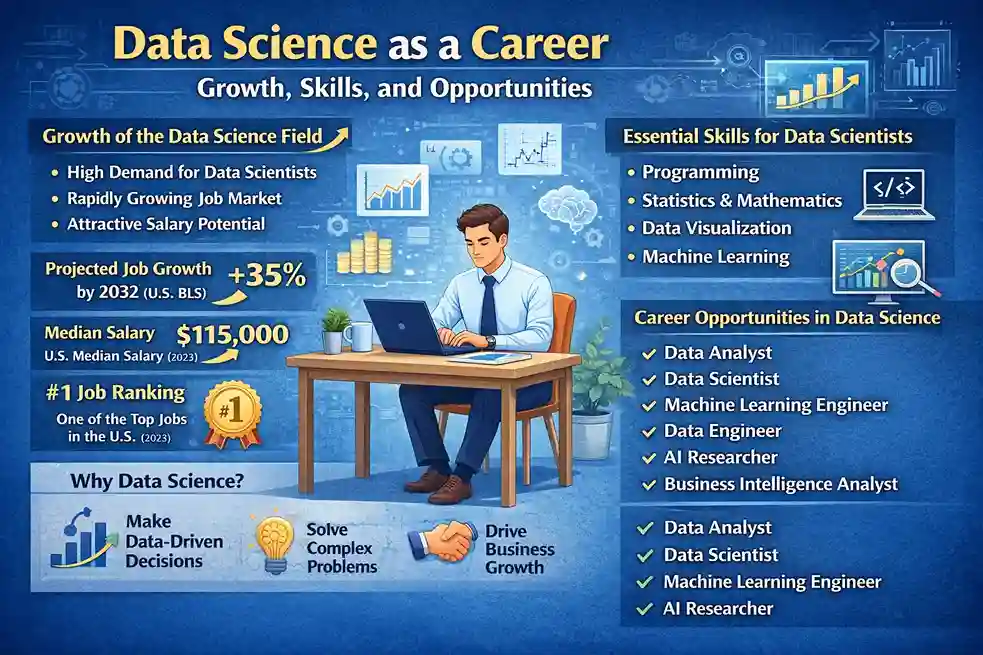
Data Science as a Career: Growth, Skills, and Opportunities
In today’s world, data has become one of the most valuable resources. Every click, search, purchase, and digital action creates data. Because of this, businesses are now data-driven, meaning they take decisions based on data instead of guesswork. This shift has created a huge demand for data science professionals, and this demand is expected to grow even faster in the coming years.
Data science is no longer just a trending word. It has become a strong career option with high growth, good salaries, and long-term stability. Companies across industries are looking for skilled people who can understand data, analyze it, and turn it into useful insights. This is why data science is considered one of the best career choices in the modern era.
Why Data Science Is in High Demand
The world is becoming more digital every day. Businesses are using websites, apps, cloud systems, and digital tools to reach customers and improve operations. As a result, they generate massive amounts of data. Handling this data is not easy, and companies need trained professionals to manage it.
Data science professionals help businesses understand customer behavior, improve products, reduce costs, and increase profits. Because these skills directly impact business success, companies are ready to offer better salary packages compared to many other professions.
Another important reason for high demand is that data science is useful in almost every industry. From finance and healthcare to e-commerce, education, manufacturing, and marketing, data science plays a key role everywhere. This wide usage makes the field stable and future-proof.
Is Data Science Only for IT Professionals?
Many people believe that data science is only for IT or computer science students. This is a common myth. In reality, data science is open to candidates from both IT and non-IT backgrounds. What matters most is your willingness to learn, your logical thinking, and your interest in working with data.
Graduates from any stream, freshers, and even working professionals looking for a career change can enter this field. With the right training and practical exposure, non-IT candidates can also build successful careers in data science.
Many people from different backgrounds such as physiotherapy, commerce, arts, and management have already transitioned into data science roles. This clearly shows that prior IT experience is not a strict requirement.
Importance of Practical Skills in Data Science
Data science is a skill-based field. Theory alone is not enough to succeed. Employers look for candidates who can solve real-world problems using data. This is why practical learning is extremely important.
Working on real-time projects helps learners understand how data science is applied in actual business scenarios. It builds confidence and improves problem-solving ability. Hands-on experience also makes candidates job-ready and helps them stand out in interviews.
A good data science program focuses more on practical labs, assignments, and projects rather than just textbook knowledge. This approach ensures that learners can apply what they learn in real jobs.
Core Skills Required for Data Science
To become a data science professional, you need to learn a mix of technical and analytical skills. Some of the most important core skills include SQL for database handling, advanced Excel for data analysis, and statistics for understanding data patterns.
Power BI and other data visualization tools are important for presenting data in a clear and meaningful way. Python is widely used in data science for data analysis and automation. Learning these tools helps build a strong foundation.
Apart from core skills, advanced topics like machine learning, natural language processing, deep learning, and data storytelling add more value to your profile. These skills help you work on complex problems and advanced projects.
Role of Updated Curriculum in Career Growth
The data science field changes very fast. New tools, technologies, and methods are introduced regularly. Because of this, it is important to learn from a curriculum that is updated frequently.
An updated curriculum ensures that learners are trained according to current industry needs. It also helps them stay competitive in the job market. Learning outdated tools can limit career growth, so staying updated is essential.
A well-structured curriculum covers both fundamentals and advanced concepts, allowing learners to grow step by step and gain confidence.
Learning Through Live Sessions and Resources
Online learning has made data science education accessible to many people. Live sessions help learners interact directly with instructors and clear doubts in real time. This creates a classroom-like experience even in online mode.
Along with live sessions, self-paced learning resources play an important role. Recorded lessons, practice materials, assignments, and projects allow learners to revise concepts and practice regularly.
Practice is a key part of mastering data science. Working on multiple assignments and projects helps learners improve their skills and understand different use cases.
Importance of Career and Placement Support
Technical skills alone are not enough to get a job. Soft skills and interview preparation are equally important. Data science professionals must know how to communicate insights clearly and work effectively in a corporate environment.
Career support services such as resume building, mock interviews, aptitude training, and communication skills training help candidates prepare for job interviews. These services build confidence and improve performance during interviews.
Workplace behavior and professional skills training also help learners adjust easily to new job roles. This complete preparation makes the transition into a data science career smoother.
Job Roles and Opportunities in Data Science
After completing data science training, candidates can apply for various roles. Some common job roles include Data Analyst, Business Analyst, Quality Analyst, and Data Science Associate.
These roles are available in many organizations, including large multinational companies, startups, and consulting firms. Because data science is used everywhere, job opportunities are spread across different sectors.
Dedicated job portals and placement support systems help connect skilled candidates with relevant job openings. This increases the chances of getting interviews and job offers.
Flexible Fee and Payment Options
One of the biggest concerns for learners is course fees. Flexible payment options make data science education more accessible. Direct payment options often come with early bird discounts and EMI facilities, reducing financial pressure.
Another popular option is the pay-on-success model. In this model, learners pay a smaller amount upfront and pay the remaining fee only after getting placed. This approach supports learners by reducing risk and building trust.
Such flexible models encourage more people to invest in their careers without worrying too much about immediate financial burden.
Who Should Choose Data Science as a Career
Data science is suitable for people who enjoy problem-solving, logical thinking, and working with numbers. If you are curious about patterns, trends, and insights hidden in data, this field can be a good match.
It is also ideal for those who want a career with strong growth, good salaries, and global opportunities. People looking for a career change or skill upgrade can also benefit greatly from data science.
Dedication and consistent practice are the most important factors for success. Anyone willing to put in the effort can build a strong career in this field.
Conclusion
Data science has become one of the fastest-growing and most in-demand career options in today’s data-driven world. With businesses relying heavily on data for decision-making, the need for skilled data science professionals will continue to rise.
This field is open to both IT and non-IT candidates and focuses more on practical skills than background. With the right training, updated curriculum, hands-on projects, and career support, anyone can enter and grow in this field.
Choosing data science means choosing a career with growth, stability, and exciting opportunities. With dedication, learning, and the right guidance, data science can truly transform your professional journey.