
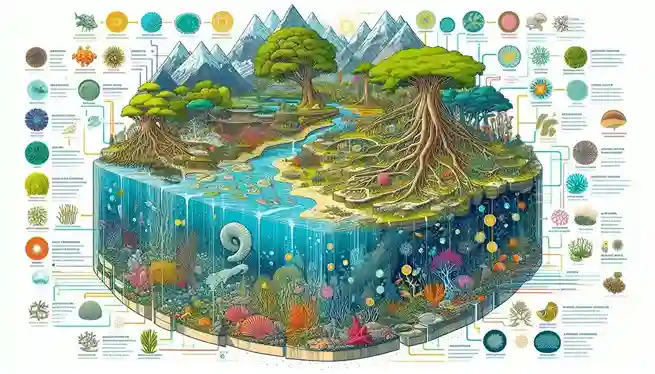
Ecosystem: Meaning, Structure, Types and Importance
An ecosystem is the natural system that exists all around us. Trees, plants, animals, soil, water, air, mountains, forests, rivers, and even tiny organisms all work together to maintain balance in nature. This balance helps life survive and grow on Earth. In simple words, an ecosystem is a community of living and non-living things that interact with each other in a specific area.
The word “ecosystem” was first used in 1935 by ecologist Arthur Tansley. He explained it as a system where living organisms and non-living components depend on each other. Life on Earth is possible only because ecosystems function properly. If this balance is disturbed, it affects plants, animals, and humans alike.
An ecosystem includes both living and non-living components. Living components are called biotic factors, while non-living components are called abiotic factors. Together, they create a continuous flow of energy and nutrients that keeps nature stable.
Structure of an Ecosystem
The structure of an ecosystem is mainly divided into biotic components and abiotic components. Both are equally important for the survival of life.
Biotic components include all living organisms such as plants, animals, microorganisms, insects, birds, and humans. These living organisms are further divided into producers, consumers, and decomposers.
Producers are plants and algae that make their own food using sunlight through the process of photosynthesis. They form the base of every ecosystem because all other organisms depend on them for energy. Examples include trees, grass, crops, and aquatic plants.
Consumers depend on producers or other consumers for food. Primary consumers are herbivores that eat plants, such as cows, goats, deer, rabbits, and sheep. Secondary consumers eat primary consumers and include carnivores or omnivores like foxes, frogs, and small birds. Tertiary consumers feed on secondary consumers and include animals like eagles, hawks, and large fish. In some food chains, there are top consumers like lions, wolves, polar bears, and humans.
Decomposers are microorganisms such as bacteria and fungi. They break down dead plants and animals into simple substances and return nutrients to the soil. This process is very important because it recycles nutrients and keeps the ecosystem clean and fertile.
Abiotic components include all non-living things present in the environment. These include sunlight, water, soil, air, minerals, temperature, humidity, climate, rocks, mountains, and ice. Sunlight is the primary source of energy for most ecosystems. Temperature and rainfall decide what type of plants and animals can survive in a particular area.
Types of Ecosystems
Ecosystems are mainly classified into two broad types: aquatic ecosystems and terrestrial ecosystems.
Aquatic Ecosystem
Aquatic ecosystems exist in water bodies. Since most of the Earth’s surface is covered with water, aquatic ecosystems are the largest ecosystems on the planet. These ecosystems support a wide variety of plants, animals, and microorganisms.
Aquatic ecosystems are divided into freshwater ecosystems and marine ecosystems.
Freshwater ecosystems include rivers, lakes, ponds, wetlands, and groundwater. The water in these ecosystems has very low salt content, making it suitable for drinking and irrigation. However, freshwater resources are very limited. Only a small percentage of Earth’s water is usable freshwater.
Flowing freshwater ecosystems, such as rivers and streams, are called lotic ecosystems. Still water ecosystems, such as lakes, ponds, and marshes, are called lentic ecosystems. Wetlands are areas where land and water meet, and they are highly productive ecosystems. Wetlands support plants called hydrophytes and provide habitat for birds, amphibians, reptiles, insects, and fish. Chilika Lake in India is a famous wetland ecosystem.
Marine ecosystems are the largest ecosystems on Earth. They include oceans, seas, coral reefs, mangroves, coastal areas, and deep-sea regions. Marine ecosystems are rich in biodiversity and support organisms ranging from tiny plankton to huge whales.
Marine ecosystems are divided into different zones based on the depth of water and sunlight penetration. The upper layer, where sunlight reaches up to about 200 meters, is called the euphotic zone. This zone supports photosynthesis and has the highest number of marine organisms like fish, sharks, turtles, jellyfish, and corals.
Below this lies the disphotic zone, where sunlight is weak. Organisms like octopus, eels, and deep-sea fish live here. The deepest zone is the aphotic zone, where no sunlight reaches. Life here survives using special adaptations and chemical energy instead of sunlight.
Terrestrial Ecosystem
Terrestrial ecosystems exist on land and are mainly influenced by climate, temperature, and rainfall. Major types of terrestrial ecosystems include forests, grasslands, deserts, tundra, and coastal regions.
Forests are ecosystems dominated by trees and dense vegetation. They support a huge variety of plants and animals. Forests are classified into tropical rainforests, temperate forests, and plantation forests. Tropical rainforests are the most diverse ecosystems on Earth. The Amazon rainforest is the largest tropical rainforest and is home to millions of species.
Tundra ecosystems are found in very cold regions near the poles. These areas have extreme weather conditions, frozen soil, and very little vegetation. Animals like polar bears, Arctic foxes, reindeer, and migratory birds live in tundra regions. The tundra ecosystem covers large parts of Alaska, Canada, and Greenland.
Desert ecosystems receive very little rainfall and have extreme temperatures. Vegetation is limited to plants like cactus and thorny bushes. Animals such as reptiles, insects, birds, and small mammals are adapted to survive in harsh desert conditions. The Sahara Desert is the largest desert in the world.
Human Impact on Ecosystems
Human activities have caused serious damage to ecosystems. Overpopulation, deforestation, pollution, overfishing, and climate change have disturbed the natural balance. Large forests are being cut down for development, leading to loss of habitat and biodiversity.
Water pollution, air pollution, soil pollution, and noise pollution are increasing rapidly. Millions of people still do not have access to clean drinking water. Air pollution has reduced average human lifespan and caused serious health problems.
Climate change has increased carbon dioxide levels in the atmosphere, leading to global warming. Rising temperatures have caused melting of glaciers, rising sea levels, floods, droughts, and extreme weather events. Many coastal cities are at risk of flooding in the future.
Overfishing has damaged marine ecosystems. Fish populations are declining, which affects marine animals like turtles and coral reefs. This also threatens the livelihood of millions of people who depend on fishing.
According to environmental organizations, thousands of species are currently endangered and at risk of extinction. If ecosystems continue to degrade, it will have a severe impact on food security, water availability, and human survival.
Conclusion
Ecosystems are the foundation of life on Earth. They provide food, water, air, shelter, and resources necessary for survival. Every plant, animal, and microorganism plays an important role in maintaining balance. Human actions have disturbed this balance, but it is still possible to protect and restore ecosystems through awareness, conservation, and sustainable living.
Protecting ecosystems is not a short-term task. It requires long-term effort and responsible behavior. Small actions like saving water, reducing pollution, planting trees, and protecting wildlife can make a big difference. A healthy ecosystem ensures a healthy future for all living beings on Earth.