
Human Nervous System: Structure, Functions and Working
The human nervous system is one of the most complex and important systems in the body. It controls everything we do, from simple actions like blinking and breathing to complex tasks like thinking, learning, and decision-making. Just like a server room looks organized from the front but has a complex network of wires behind it, our body also looks simple from the outside, but inside it has a highly organized and complicated nervous system.
The nervous system works as a communication network of the body. It sends and receives messages between the brain and different body parts. These messages are in the form of electrical and chemical signals. Because of this system, we can feel pain, touch, heat, cold, emotions, and pleasure. It also helps us move, speak, and respond quickly to danger.
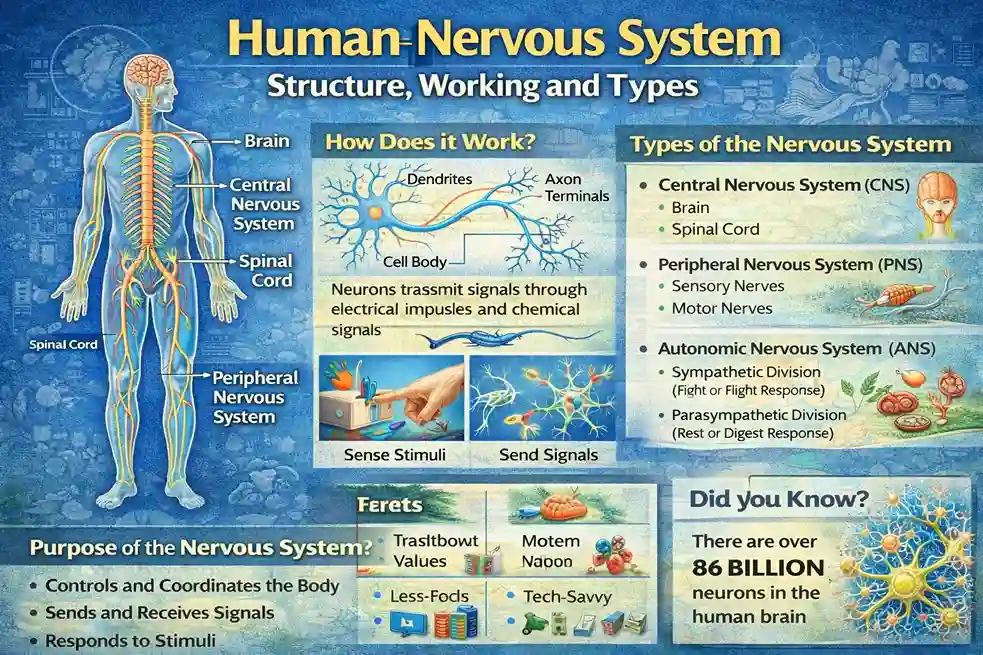
The nervous system has three main parts: the brain, the spinal cord, and the nerves. Together, they help the body sense what is happening inside and outside and respond in the right way.
Main Parts of the Nervous System
The brain is the control center of the body. It receives information from all parts of the body, processes it, and sends commands back. For example, if a mosquito bites you, the brain receives the pain signal and sends a command to move your hand to kill it. The brain also controls memory, emotions, intelligence, and behavior.
The spinal cord is a long, tube-like structure that runs inside the backbone. It connects the brain to the rest of the body. It acts as a pathway for signals traveling between the brain and nerves. It also controls reflex actions, like quickly pulling your hand away from a hot object.
Nerves are like communication cables that spread throughout the body. They carry messages from the brain and spinal cord to muscles, organs, and glands, and also bring sensory information back to the brain.
How the Nervous System Works
The nervous system works by sending electrical signals called nerve impulses. These signals travel very fast, allowing the body to react quickly. For example, when you touch something hot, you immediately pull your hand away. This quick action happens because the nervous system detects danger and responds instantly.
The nervous system constantly monitors what is happening inside and outside the body. It controls both voluntary actions, like walking and writing, and involuntary actions, like heartbeat, sweating, and blinking. You do not need to think about these involuntary actions; the nervous system handles them automatically.
Neurons: The Building Blocks
The nervous system is made up of special cells called neurons. Neurons are designed to carry nerve impulses. Each neuron carries a specific type of information, such as pain, temperature, pressure, or pleasure.
A neuron has three main parts. The cell body contains the nucleus and controls the cell’s activities. Dendrites are branch-like structures that receive signals from other neurons. Axons are long, tail-like structures that carry signals away from the cell body to other neurons or target organs.
Neurons are highly specialized cells. Once damaged, most neurons cannot be replaced because they do not divide like other body cells. This is why injuries to the brain or spinal cord can be very serious.
Electrical Signals in Neurons
Inside a neuron, there is a difference in electrical charge between the inside and outside of the cell. The inside of the neuron has more potassium ions, while the outside has more sodium ions. This difference creates a resting electrical charge, called the resting potential.
When a stimulus occurs, special protein channels open, allowing sodium ions to enter the neuron. This changes the electrical charge and creates an action potential. This electrical signal moves along the axon and passes to the next neuron. After the signal passes, potassium ions move out, and the neuron returns to its resting state.
This process allows signals to move in one direction and prevents them from going backward.
Synaptic Transmission
Neurons do not touch each other directly. There is a small gap between them called a synapse. When an electrical signal reaches the end of an axon, it triggers the release of chemicals called neurotransmitters.
These neurotransmitters cross the synapse and attach to receptors on the next neuron or target organ. This process is called synaptic transmission. The receiving cell then decides whether to pass the signal forward, strengthen it, weaken it, or block it completely.
Types of Nervous System Functions
The functions of the nervous system are divided into three main categories: sensory, integrative, and motor functions.
Sensory function involves detecting changes in the environment, such as heat, cold, pain, light, sound, and pressure. Sensors in the skin, eyes, ears, nose, and internal organs send this information to the brain.
Integrative function is the process of analyzing and interpreting sensory information. The brain decides what the information means and what action should be taken.
Motor function involves sending commands from the brain to muscles or glands. This results in movement, secretion, or other actions. For example, when you feel heat, your brain tells your muscles to move your hand away.
Nervous Tissue and Supporting Cells
Nervous tissue consists of neurons and supporting cells called neuroglia. Neuroglia do not carry nerve impulses. Instead, they support, protect, and nourish neurons.
Neuroglial cells can divide and replace damaged cells. Some neuroglia form protective coverings around axons to speed up signal transmission. Schwann cells are a type of neuroglia that supply nutrients and help maintain nerve fibers.
Organization of the Nervous System
The nervous system is divided into two main parts: the central nervous system and the peripheral nervous system.
The central nervous system includes the brain and spinal cord. These are the most important organs and are well protected by the skull and backbone.
The peripheral nervous system includes all nerves outside the central nervous system. It connects the brain and spinal cord to the rest of the body. It consists of cranial nerves and spinal nerves.
The peripheral nervous system is further divided into sensory and motor divisions. The motor division is divided into the somatic nervous system and the autonomic nervous system.
The somatic nervous system controls voluntary movements of skeletal muscles, such as walking and lifting objects. The autonomic nervous system controls involuntary actions, such as heartbeat, digestion, and breathing. It works without conscious effort.
Amazing Facts About the Nervous System
The human body contains billions of neurons. The brain alone has around 100 billion neurons, while the spinal cord has more than 100 million neurons. Nerve signals can travel at speeds of 70 to 120 meters per second, which is faster than many vehicles on the road.
The total length of nerves in the human body is estimated to be around 96,000 kilometers. This shows how vast and complex the nervous system is.
Conclusion
The human nervous system is a highly organized and powerful system that controls every aspect of life. From basic survival functions to complex thinking and emotions, everything depends on this system. Neurons, electrical signals, neurotransmitters, and supporting cells work together to keep the body connected and responsive.
Understanding the nervous system helps us appreciate how the body functions and why protecting brain and nerve health is so important. Because neurons cannot easily be replaced, caring for the nervous system through a healthy lifestyle, proper nutrition, and injury prevention is essential. The nervous system truly acts as the body’s communication backbone, making life possible and meaningful.