
Antibiotics: Uses, Types, Benefits, and Risks
Health problems are a part of life, and almost everyone has to deal with infections at some point. Some infections are mild, like the common cold, while others are serious, such as pneumonia. Infections can be caused by different microorganisms, mainly bacteria and viruses. Our immune system is always active and tries to protect the body from these harmful germs. However, when an infection becomes too strong, the immune system alone may not be able to fight it. In such cases, doctors prescribe medicines to help the body recover.
One of the most powerful and effective medicines used to treat infections is antibiotics. When we take antibiotics, we often start feeling better quickly, which makes them feel almost like a magic cure. But antibiotics are not magic. They are strong medicines that must be used carefully. To use them safely, it is important to understand what antibiotics are, how they work, what infections they treat, and why they should only be taken on a doctor’s advice.
What Are Antibiotics
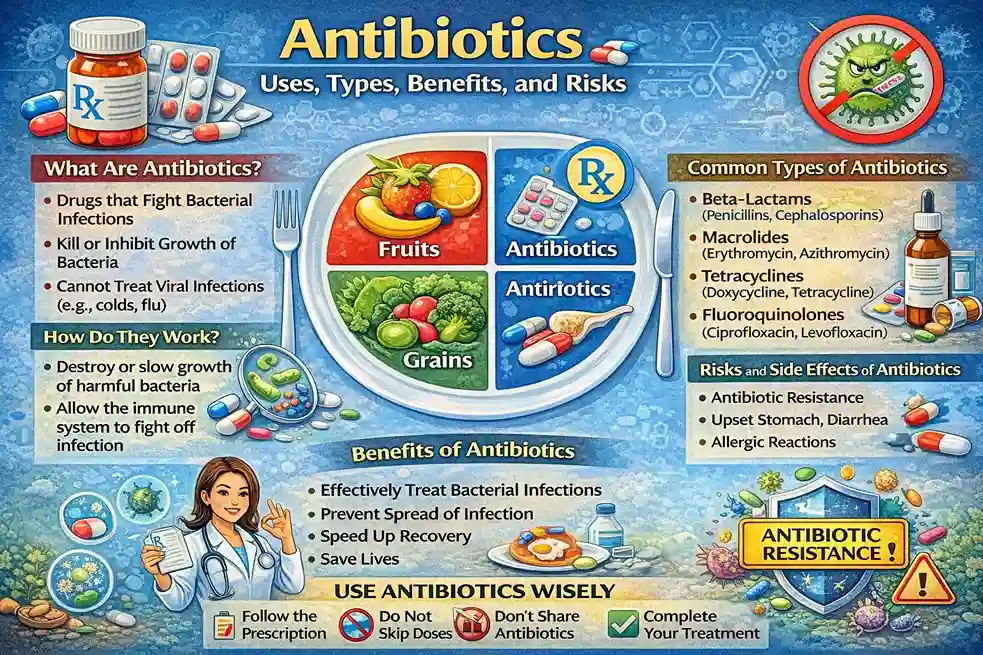
Antibiotics are medicines that fight bacterial infections. Because they work against bacteria, they are also called antibacterial medicines. Antibiotics are not a single medicine but a large group of medicines. Each type works in a different way and is used for different kinds of bacterial infections. Some common groups of antibiotics include penicillin, aminoglycosides, cephalosporins, and monobactams.
It is very important to know that antibiotics work only against bacterial infections. They do not work against viral infections such as the common cold, flu, or most sore throats. Taking antibiotics for viral infections does not help and can be harmful.
Types of Infections Antibiotics Can Treat
Antibiotics are used to treat many bacterial infections. These include skin infections, bacterial pneumonia, strep throat, whooping cough, bacterial vaginosis, urinary tract infections, eye infections, some ear and sinus infections, dental infections, meningitis, bladder infections, and kidney infections. In all these conditions, bacteria are the main cause, and antibiotics help the body fight and remove them.
However, not every infection needs antibiotics. Some infections can heal on their own with rest and basic care. That is why a doctor’s diagnosis is very important before starting antibiotics.
Forms of Antibiotics
Antibiotics are available in different forms depending on the type and severity of the infection. Oral antibiotics are the most common and include tablets, capsules, and liquid syrups. These are usually prescribed for mild to moderate infections.
Topical antibiotics are used on the outer parts of the body. These include creams and ointments applied to the skin to treat local infections. For eye and ear infections, antibiotic drops are commonly used.
In serious bacterial infections, antibiotics may be given through injections. These are usually used in hospitals when fast and strong treatment is needed.
History of Antibiotics
The discovery of antibiotics changed the world of medicine. In 1910, scientists introduced the first antibiotic treatment. Later, in 1928, penicillin was discovered and became the first natural antibiotic. Before antibiotics were available, even small bacterial infections could be deadly. Many people lost their lives due to infections that are easily treatable today.
After antibiotics were introduced, life expectancy increased, and bacterial infections became much easier to control. Antibiotics are now considered one of the greatest medical discoveries in human history.
Meaning of the Word Antibiotic
The word antibiotic comes from two parts: “anti” and “biotic.” “Anti” means against, and “biotic” relates to life. Bacteria are living organisms, so antibiotics are medicines that work against bacterial life.
Bacteria are microscopic germs found everywhere. Some bacteria live on our skin and inside our body and are helpful, such as gut bacteria that aid digestion. However, some bacteria cause infections and diseases. When harmful bacteria grow too much and the immune system cannot control them, antibiotics help by killing the bacteria or stopping their growth.
How Antibiotics Work in the Body
Antibiotics work in different ways to fight bacteria. Some antibiotics destroy the bacterial cell wall, which causes the bacteria to die. Others damage the bacteria’s DNA, preventing them from growing and multiplying. Some antibiotics stop bacteria from making proteins that are essential for their survival.
Once antibiotics enter the body, they start working quickly. How fast a person feels better depends on the type of infection and how much it has spread. Antibiotics can stay active in the body for several hours or even days to complete their job.
Importance of Completing the Full Dose
To fully remove bacteria from the body, it is very important to take antibiotics exactly as prescribed. This includes taking the correct dose at the right time and completing the full course. Many people stop taking antibiotics as soon as they feel better, but this is a mistake.
Stopping antibiotics early may leave some bacteria alive. These bacteria can grow again and cause the infection to return. Completing the full course ensures that all harmful bacteria are destroyed.
Why Antibiotics Should Only Be Taken on Doctor’s Advice
Antibiotics should only be taken when they are truly needed and prescribed by a doctor. Taking antibiotics without medical advice can cause serious problems. One major issue is antibiotic resistance. This happens when bacteria change and become strong enough to resist the effects of antibiotics.
When antibiotic resistance develops, the medicine no longer works, and infections become harder to treat. This can lead to serious health problems and longer illnesses. Some infections that once had simple treatments may become life-threatening due to resistance.
Certain infections, such as some sinus and ear infections, can heal without antibiotics. Using antibiotics unnecessarily increases the risk of resistance and should be avoided.
Side Effects of Antibiotics
Like all medicines, antibiotics can cause side effects. Common side effects include diarrhea, nausea, vomiting, dizziness, and stomach discomfort. These usually go away after the treatment ends.
Some people may be allergic to certain antibiotics. Allergic reactions can cause itching, skin rashes, or redness. In severe cases, swelling of the face, tongue, or throat can occur, along with breathing difficulties. This is a medical emergency and needs immediate treatment.
Antibiotics can also interact with other medicines and supplements, which may increase side effects. That is why it is important to tell the doctor about all medicines you are taking.
Safe Use of Antibiotics
Antibiotics are very useful and life-saving medicines when used correctly. Taking the right antibiotic, in the right dose, at the right time, can easily cure many bacterial infections. On the other hand, wrong use can be dangerous.
Always consult a doctor before taking antibiotics. Follow the prescription carefully and complete the full course. Inform your doctor about allergies, ongoing medicines, and supplements to avoid harmful reactions.
Conclusion
Antibiotics play a very important role in treating bacterial infections and saving lives. They work by killing bacteria or stopping their growth and have made many deadly infections treatable. However, antibiotics are powerful medicines and must be used responsibly.
They should only be taken for bacterial infections and only on a doctor’s advice. Completing the full course, avoiding unnecessary use, and being aware of side effects are essential for safe treatment. When used correctly, antibiotics protect health and improve recovery, but misuse can lead to serious problems like antibiotic resistance. Understanding these basics helps everyone use antibiotics safely and wisely.