
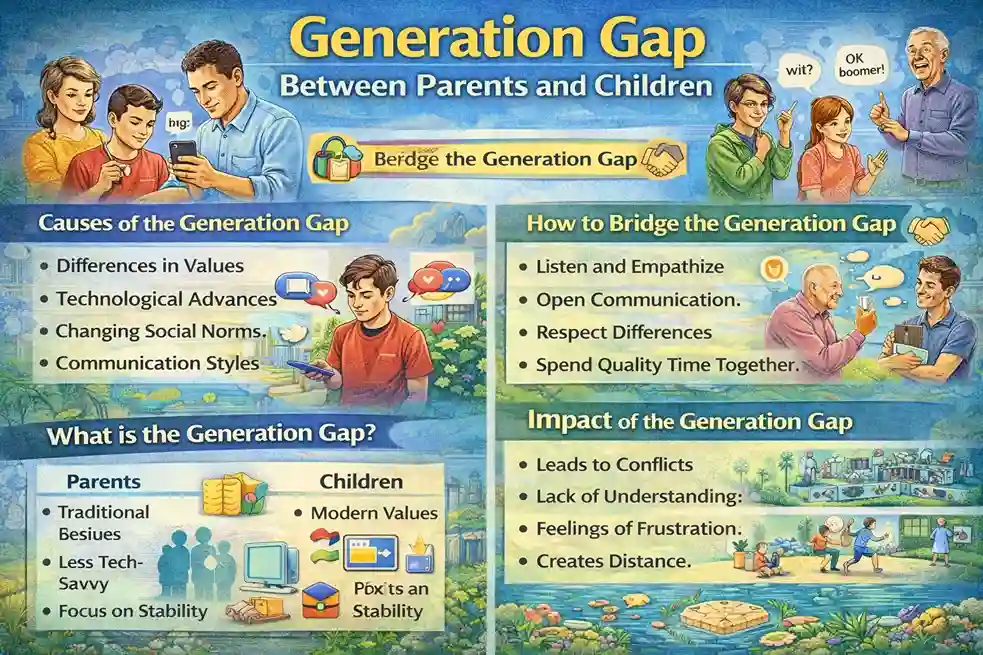
Generation Gap Between Parents and Children
The generation gap is a common problem that has existed for many years and may continue if it is not understood properly. Almost every family talks about it at some point. Whenever there is a conflict between parents and children, instead of solving it, people often say, “This is because of the generation gap.” The term sounds simple, but its impact on relationships can be very deep and negative.
The generation gap does not only mean an age difference between parents and children. It also includes differences in thinking, beliefs, mindset, expectations, values, culture, and lifestyle. Because of these differences, misunderstandings increase and emotional distance grows. That is why it is important to understand what the generation gap really is, why it happens, and whether it can be reduced or removed.
What Is the Generation Gap?
The most visible reason for the generation gap is age, but the real issue is the mental and emotional gap. Parents and children grow up in very different times. Children feel they are mature enough to be independent because that is the trend of their time. Parents, on the other hand, often feel their children are still too young and need control and guidance, because that is how life was during their own upbringing.
Both generations believe their own way of thinking is correct. Parents want their children to grow up with the same values and methods they followed. Children often reject traditional ways and want to live according to modern ideas. This difference in thinking slowly turns into conflict.
With time, everything changes. Culture, morality, fashion, technology, values, lifestyle, and even communication styles change. Older generations prefer face-to-face conversations and physical connections. Younger generations are more comfortable with messages, calls, and virtual communication. These differences create misunderstandings and emotional gaps.
Main Reasons Behind the Generation Gap
Understanding the reasons behind the generation gap helps us see how it develops and grows over time.
Lack of Understanding
One of the biggest reasons is a lack of understanding. Both generations think they are right and the other is wrong. Parents feel children are getting spoiled or moving away from values. Children feel parents are old-fashioned and do not understand modern life.
Parents often do not try to understand children’s choices, interests, and trends with an open mind. Children also ignore the importance of their parents’ advice and experience. This mutual lack of understanding increases distance between them.
Not Accepting Mistakes
The younger generation learns and grows by making mistakes. Mistakes are a natural part of life. But when parents do not tolerate mistakes and only scold or punish children, children feel scared and misunderstood. This widens the gap.
At the same time, when children choose arguments instead of listening to facts and guidance from parents, conflicts increase. Both sides stop listening to each other.
Forcing Children to Be Like Parents
Many parents expect their children to live the life they could not live or fulfill dreams they could not complete. They forget that children can have different dreams, goals, and purposes in life. When children are forced to follow a fixed path, their interests and happiness get suppressed, and resentment grows.
From the children’s side, they sometimes see parents as outdated and start ignoring their suggestions completely. They wish their parents were more like modern parents they see around them. This thinking also increases tension.
Comparison With Others
Comparison is very harmful. When parents compare their children with other children, it hurts their confidence and self-worth. Children feel they are never good enough and slowly stop sharing their feelings. They feel lost instead of guided.
Similarly, when children compare their parents with richer or more modern parents of friends, it deeply hurts parents. Comparison always causes pain, no matter who does it.
Lack of Interaction and Time
Spending quality time together is very important. Parents may work hard to provide comfort and facilities, but children also need time, attention, and emotional connection. When parents do not spend enough time with children, communication problems grow.
In the same way, when children stop giving time to parents, silence and emotional distance develop in relationships. This lack of interaction strengthens the generation gap.
Solutions to Reduce the Generation Gap
The generation gap can be reduced if both sides truly want to improve their relationship. Just as there are many reasons, there are also many simple and effective solutions.
Being Open-Minded
Parents need to understand that judging children or always opposing their thoughts only increases problems. To build a strong and loving relationship, parents must be open-minded. They should try to understand the changes in their children’s generation and listen to what their children want and feel.
Children should also remember that parents have valuable life experience. Listening to them does not mean losing freedom. It means learning from wisdom.
Giving Time to Each Other
Time is one of the most valuable gifts in relationships. Children need their parents’ time, love, and attention, not just comfort and facilities. Simple efforts like playing together, going for walks, traveling, or shopping can bring warmth back into relationships.
Children should also remember that parents have made many sacrifices for them. Spending good time with parents is equally important for emotional bonding.
Effective Communication
Living in the same house but not talking increases the generation gap. Daily communication makes relationships stronger. Parents and children should talk to each other every day, openly and honestly.
Parents should create a safe space where children can share their thoughts without fear of judgment or comparison. Communication becomes effective only when listening is done with full attention, love, and respect. Parents should take the first step, as they have more life experience and emotional maturity.
Unconditional Love
Parents often love their children deeply, but they must reflect whether that love is unconditional. Unconditional love does not include constant criticism, anger, blame, or comparison. When parents express love through care, support, and trust, children feel emotionally secure.
Children should also express their love and emotions openly instead of hiding them. This creates a warm and positive environment and strengthens the bond between generations.
Acceptance of Differences
Acceptance is very important. Parents should accept their children as they are, even if they do not agree with every thought or decision. Trying to control or force children emotionally harms both the child and the relationship.
Children should also accept their parents as they are. Parents may not follow the latest trends or technology, but they deserve respect and acceptance. This mutual acceptance allows healthy discussions and better solutions to problems.
Learning From Each Other
Instead of focusing only on differences, both generations should learn from each other. Children can teach parents about new technology, trends, and modern thinking. Parents can teach children about values, patience, discipline, and life experience.
When both generations are ready to learn and grow together, the generation gap naturally reduces.
Conclusion
The generation gap exists because of changes in time, thinking, and lifestyle. No generation is completely right or wrong. They only look different because they belong to different times. Understanding, acceptance, respect, communication, and love are the keys to reducing this gap.
When parents and children listen to each other, accept differences, and grow together, conflicts reduce and relationships become stronger. The generation gap can then turn into a beautiful diversity that connects the wisdom of the past with the energy of the present.