
How to Remove Pesticides from Fruits and Vegetables Safely
We all know that fresh fruits and vegetables are very important for good health. They give our body essential vitamins, minerals, fiber, and antioxidants that help us stay active and disease-free. Doctors and nutrition experts always advise us to eat more fruits and vegetables every day. However, in today’s time, it has become difficult to say that the fruits and vegetables we eat are truly fresh and natural.
Before reaching our kitchen, fruits and vegetables go through farming, harvesting, storage, and transportation. During this process, they are treated with pesticides to protect them from insects, bacteria, fungi, and plant diseases. Because of this, the food that comes to our plate often contains more pesticide residue than natural freshness. If these pesticides enter our body in large amounts, they can cause serious health problems such as cancer, kidney disease, lung problems, hormonal imbalance, and weak immunity.
This raises an important question. If pesticides are so harmful, why are they used at all? Are organic foods completely pesticide-free? And most importantly, are there safe and simple ways to remove pesticides from fruits and vegetables at home? The answer is yes. There are many easy and effective methods that can help reduce pesticide residue and make our food safer to eat.
What Are Pesticides and Why Are They Used
Pesticides are chemical or natural substances used by farmers to protect crops from insects, weeds, fungi, and harmful microorganisms. Without pesticides, many crops would get damaged, leading to low production and food shortages. That is why pesticides are commonly used in modern farming.
There are different types of pesticides. Herbicides are used to kill weeds. Insecticides protect crops from insects. Fungicides prevent fungal growth, and bactericides stop bacterial infections in plants. Hard-skinned fruits and vegetables like pumpkin and watermelon usually need fewer pesticides. On the other hand, soft and leafy items like strawberries, grapes, apples, spinach, and tomatoes need more pesticides because they are easily damaged.
Some amount of pesticide reduces naturally due to sunlight, washing, and transportation. Still, a portion remains on the surface of fruits and vegetables. This leftover residue needs to be removed before consumption.
Are Organic Fruits and Vegetables Pesticide-Free
Many people believe that organic food is completely free from pesticides, but this is not fully true. Organic farming does not use synthetic or chemical pesticides, but it does use natural or organic pesticides. These are considered safer, but they are still pesticides. Their quantity is usually lower, but they can still remain on fruits and vegetables.
This means that eating organic food is a better choice, but eating it without proper cleaning is not the right choice. Whether the food is organic or non-organic, washing and cleaning are always necessary.
Why Cleaning Fruits and Vegetables Is Important
Cooking can reduce some pesticide residue, but it cannot remove everything. Many fruits are eaten raw, such as apples, grapes, and bananas. If they are not cleaned properly, pesticides directly enter our body. Making a habit of cleaning fruits and vegetables before eating is one of the easiest ways to protect our health.
Below are ten simple and effective methods that can help remove pesticides and chemicals from fruits and vegetables at home.
Wash with Plain Running Water
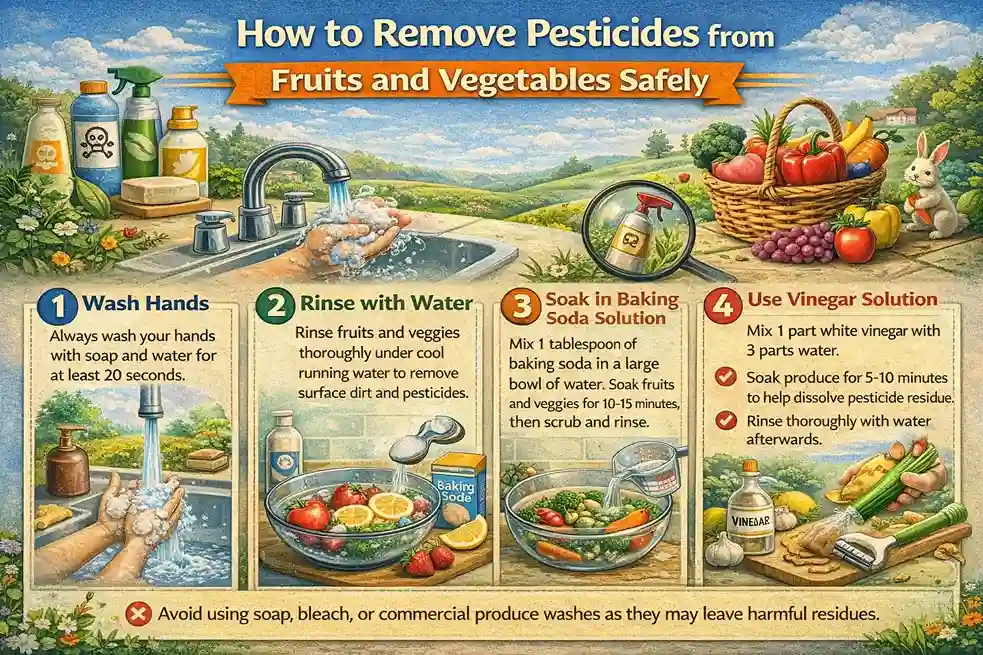
The first and most basic step is washing fruits and vegetables under running tap water. Always rub the surface gently with your hands while washing. This helps remove dirt, dust, and some pesticide residue. Even fruits and vegetables labeled as “pre-washed” should be washed again because they are often cleaned using chemicals like chlorine or bleach before packaging.
Plain water washing is helpful, but it is not enough to remove all pesticides. That is why additional methods are useful.
Use Salt Water Soak
Salt water is a very effective home remedy. To use this method, add natural salt such as sea salt or Himalayan salt to a bowl of water. Soak fruits and vegetables in this solution for about 15 to 20 minutes. After soaking, rinse them well with clean water.
Salt water helps break down and remove common pesticide residues from the surface of fruits and vegetables.
Clean with Baking Soda Solution
Baking soda, also known as sodium bicarbonate, is one of the most effective ways to reduce pesticides. Mix one teaspoon of baking soda in two cups of water. Soak fruits and vegetables in this solution for about 15 minutes, then rinse thoroughly with clean water.
Studies have shown that baking soda solution can remove up to 90 percent of certain pesticides from produce.
Use Vinegar Water
Vinegar can also help remove pesticide residue and bacteria. Mix one part vinegar with four parts water. Soak fruits and vegetables in this mixture for about 15 to 20 minutes, then rinse well with clean water.
Be careful with soft fruits like strawberries and grapes, as soaking them too long can damage their texture.
Clean with Lemon Juice
Lemon juice has natural antibacterial and antimicrobial properties. Add lemon juice or citric acid to water and soak fruits and vegetables for a few minutes. After soaking, rinse them with clean water.
This method helps reduce germs, bacteria, and some pesticide residue naturally.
Use Neem Water or Neem Oil
Neem is well known for its natural antibacterial and antifungal properties. First, wash fruits and vegetables with normal water. Then add a few drops of neem oil or crushed neem leaves to warm water. Soak the produce for 10 to 15 minutes and rinse again with clean water.
This method helps remove pesticide residue, wax coating, and harmful microbes.
Lemon Juice and Baking Soda Spray
You can also combine lemon juice and baking soda in water to make a natural cleaning spray. Spray this solution on fruits and vegetables and leave it for about 10 minutes. Then wash with clean water.
This combination works well for removing surface chemicals and pesticides.
Remove Wax Coating from Fruits
Many fruits, especially apples, are coated with wax to improve appearance and shelf life. This wax can trap pesticides. To remove it, gently scrape the surface with a knife and then wash thoroughly. Another method is to dip the fruit in hot water for a few seconds and rub it with a clean towel.
Blanching Method
Blanching is a cooking process where fruits or vegetables are placed in boiling water for 15 seconds to one minute and then transferred to ice-cold water. This helps remove impurities, pesticides, and chemicals from the surface. Blanching is especially useful for vegetables before cooking.
Commercial Vegetable Washes
There are commercial sprays available in the market that claim to remove pesticides. These can be used, but they should not be overused because they may also contain chemicals. Natural home methods are usually safer and more affordable.
Conclusion
Fruits and vegetables are essential for a healthy life, but pesticide residue can turn healthy food into a health risk. Completely avoiding pesticides is not possible, but reducing them is definitely possible. By using simple home methods like washing with water, salt solution, baking soda, lemon juice, vinegar, neem, and blanching, we can make our food much safer.
Whether fruits and vegetables are organic or non-organic, cleaning them properly before eating is very important. Small daily habits like these can protect us from long-term health problems and help us enjoy the real benefits of fruits and vegetables. Healthy food becomes truly healthy only when it is clean and safe to eat.