
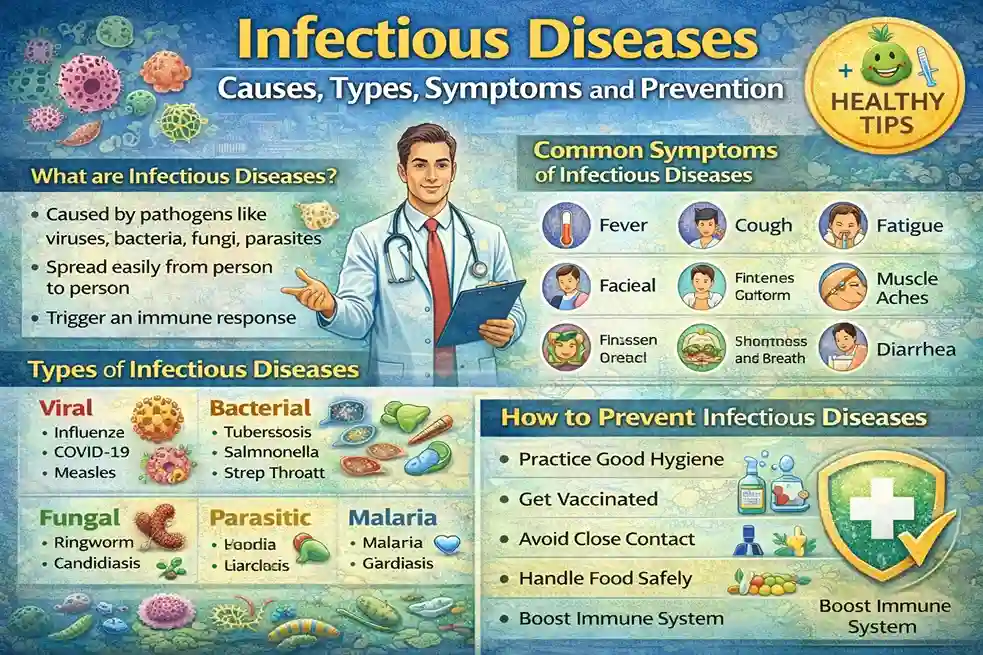
Infectious Diseases: Causes, Types, Symptoms and Prevention
Infectious diseases are one of the major causes of death all over the world. These diseases are caused by harmful organisms called pathogens. Pathogens mainly include viruses, bacteria, fungi, parasites, and in rare cases, abnormal proteins. When these harmful organisms enter the human body, they start growing and multiplying. This leads to illness and weakens the body’s normal functions.
Infectious diseases can spread very easily. They may spread from one person to another through direct contact such as touching, kissing, coughing, or sneezing. They can also spread through contaminated food, water, or soil. In some cases, insect bites such as mosquito or tick bites are responsible for spreading infections. Because of these reasons, infectious diseases are a serious health problem and need proper awareness and care.
Not all diseases are infectious. Some diseases like cancer, diabetes, and Alzheimer’s disease are non-infectious. These diseases do not spread from person to person because they are not caused by pathogens. Understanding this difference helps people take the right preventive steps.
Types of Infectious Diseases
Infectious diseases are divided into different types based on the organism that causes them. Each type affects the body in a different way and needs different treatment.
Viral Infections
Viral infections are caused by viruses. Viruses are extremely small, even smaller than bacteria. They cannot survive or reproduce on their own. They need a living host, such as the human body, to grow and multiply. Once a virus enters the body, it uses the body’s cells to make more viruses, which causes illness.
Common viral infections include the common cold, flu, COVID-19, hepatitis, measles, chickenpox, and HIV. Some viral infections are mild and go away on their own, while others can be severe and long-lasting.
Bacterial Infections
Bacterial infections are caused by bacteria. Bacteria are single-celled organisms found almost everywhere, including air, water, soil, and inside the human body. Many bacteria are harmless and even helpful, but some bacteria are harmful and cause diseases.
Examples of bacterial infections include strep throat, tetanus, cholera, tuberculosis, plague, urinary tract infections, and gonorrhea. Unlike viral infections, many bacterial infections can be treated effectively with antibiotics when taken correctly.
Fungal Infections
Fungal infections are caused by fungi. Fungi can live on the skin, nails, mouth, and even inside the body. Most fungi are harmless, but some can cause infection when they enter the body through cuts or weak areas.
Common fungal infections include ringworm, nail infections, athlete’s foot, and jock itch. These infections usually affect the skin and cause itching, redness, and irritation.
Parasitic Infections
Parasitic infections are caused by parasites such as worms and protozoa. Parasites live in or on another organism and depend on it for survival. They take nutrients from the host’s body and cause illness.
Examples include infections caused by pinworms, tapeworms, hookworms, and malaria parasites. Parasitic infections are more common in areas with poor sanitation and unsafe drinking water.
Rare Prion Diseases
Prion diseases are very rare infectious diseases caused by abnormal proteins called prions. These abnormal proteins damage the brain and lead to serious brain disorders. Prion diseases can cause dementia, memory loss, and loss of muscle control. These diseases are serious and usually worsen over time.
Symptoms of Infectious Diseases
The symptoms of infectious diseases depend on the type of infection and the part of the body affected. Some symptoms are common across many infections.
Common symptoms include fever, chills, cough, sneezing, tiredness, headache, body pain, vomiting, and diarrhea. Viral, bacterial, and parasitic infections often show these symptoms.
Fungal infections usually cause skin problems such as rashes, redness, itching, and peeling skin.
Prion diseases cause different symptoms, such as poor muscle control in arms and legs, difficulty in speaking and understanding, confusion, memory loss, sleep problems, anxiety, and depression.
People at Higher Risk
Some people have a higher risk of getting infectious diseases. These include people with weak immune systems, young children, pregnant women, and people above 60 years of age. People who are not vaccinated are also at higher risk.
Traveling to areas where mosquito-borne diseases like malaria, dengue, or Zika virus are common also increases the risk of infection. Poor hygiene and unsafe living conditions further raise the chances of getting infected.
How Infectious Diseases Spread
Infectious diseases spread in many ways. The mouth, nose, and cuts on the skin are common entry points for pathogens. Poor cleanliness at home or workplaces increases the risk of infection.
Contaminated food and water are major causes of infections. Working in contaminated soil can also expose people to harmful organisms. Close contact such as kissing or sexual contact can spread infections from one person to another.
Mosquitoes, ticks, and animal bites are common sources of infection spread. Infections can also pass from a pregnant mother to her baby. Blood transfusions, organ transplants, and some medical procedures may spread infections if proper safety measures are not followed. Contact with stool of infected humans or animals can also spread disease.
Diagnosis of Infectious Diseases
Doctors diagnose infectious diseases based on symptoms and medical tests. Different tests are used to identify the exact cause of infection.
Throat swab tests are used for throat infections. Blood, urine, stool, or saliva samples are taken for testing. Skin samples may be tested in case of skin infections. Imaging tests like X-ray, CT scan, and MRI are used to check affected body parts when needed.
Treatment of Infectious Diseases
Treatment depends on the type of infection. Doctors decide treatment based on test results.
Viral infections are treated with antiviral medicines in some cases. Bacterial infections are treated using antibiotics. Fungal infections are treated with antifungal medicines, which may be taken orally or applied on the skin. Parasitic infections are treated with antiparasitic medicines.
Medicines should always be taken as prescribed by a doctor. Self-medication can cause serious side effects and may become life-threatening.
Prevention of Infectious Diseases
Many infectious diseases can be prevented by following simple steps. Vaccination is one of the most effective ways to prevent infections such as chickenpox, COVID-19, hepatitis A and B, measles, mumps, rubella, polio, rabies, and tuberculosis.
Good hand hygiene is very important. Hands should be washed with soap and water before eating, after cooking, and after using the toilet. Covering the mouth and nose while coughing or sneezing helps prevent spread.
Fruits and vegetables should be washed properly before use. Only well-cooked food should be eaten, and clean drinking water should be used. Homes and kitchens should be kept clean.
People with infectious diseases should avoid close contact with others and should not share personal items. Safe practices during sexual contact are important. Bug repellents help reduce the risk of mosquito and tick bites.
A healthy lifestyle also helps prevent infections. Eating a balanced diet, getting enough sleep, and exercising regularly strengthen the immune system and help the body fight infections better.
Conclusion
Infectious diseases are a serious health concern, but many of them can be prevented and treated with proper knowledge and care. Understanding the causes, types, symptoms, spread, diagnosis, and prevention of infectious diseases helps people stay safe and healthy. By following good hygiene, getting vaccinated, and maintaining a healthy lifestyle, the risk of infectious diseases can be greatly reduced. Early medical advice should always be taken if serious symptoms appear, as timely treatment can save lives.